
Why Floating-Rate Loan Revenue Is Falling at Major Banks and What It Signals for Commercial Real Estate

February 20, 2026

Recent earnings reports from major U.S. banks have revealed a noticeable shift in one of their most important revenue streams: income from floating-rate commercial real estate loans. Institutions such as Wells Fargo and Bank of America reported declines in loan yields tied to floating-rate products, a change that has drawn attention from lenders, investors, and commercial real estate professionals alike.


At first glance, the story appears straightforward. Interest rates have begun to move lower, and floating-rate loans respond accordingly. But the implications go far beyond a simple yield adjustment. This trend offers a clearer view into how banks are navigating a changing rate environment, how borrowers are reacting, and what the next phase of commercial real estate finance may look like.


To understand why floating-loan revenue is declining, and why it still matters despite strong borrowing demand, it helps to step back and examine how these loans work, what has changed in the broader economy, and how lenders are adjusting their strategies.


Understanding Floating-Rate Loans in Commercial Real Estate


Floating-rate loans are a core financing tool in commercial real estate. Unlike fixed-rate loans, which lock in an interest rate for the duration of the loan, floating-rate loans reset periodically based on a benchmark index such as SOFR or another short-term reference rate. The borrower’s interest payment rises or falls as the benchmark moves.


For lenders, floating-rate loans offer an important advantage in rising rate environments. As interest rates increase, loan yields rise as well, helping banks protect margins and generate higher net interest income. For borrowers, these loans can provide flexibility, particularly for shorter-term strategies such as acquisitions, bridge financing, repositioning projects, or construction-adjacent lending.


Over the past several years, floating-rate loans became especially attractive to banks as benchmark rates climbed. Higher rates translated into higher income, and many lenders leaned heavily into floating-rate structures across their commercial portfolios.


That dynamic has now begun to reverse.


The Direct Impact of Falling Rates on Bank Revenue


As the Federal Reserve began cutting rates, the yield advantage of floating-rate loans narrowed. When benchmark rates decline, interest payments on floating loans reset downward. For banks, this means lower interest income even if loan balances remain steady or grow.


Recent earnings disclosures illustrate this clearly. Large banks reported that average loan yields declined by several dozen basis points over recent quarters. While the precise figures varied by institution, the direction was consistent across the sector. Floating-rate income is compressing.

This matters because net interest income is one of the most important profit drivers for traditional banks. Even modest changes in yield can translate into meaningful revenue shifts when applied across large loan books.


What is notable is that these revenue declines are not being driven by falling demand. In many cases, banks continue to see strong appetite for floating-rate commercial real estate loans. The issue is not volume. It is pricing.


Why Borrower Demand Remains Strong


Despite lower yields for lenders, borrowers continue to pursue floating-rate financing. There are several reasons for this.

First, lower benchmark rates reduce borrowing costs. For sponsors focused on near-term execution or transitional strategies, floating-rate loans may now offer more attractive economics than they did a year ago. Debt service is lower, and capital stacks can be structured more efficiently.

Second, uncertainty about the long-term rate path still makes some borrowers hesitant to lock into fixed rates. While rates have declined, many market participants believe future cuts may follow. Floating-rate loans preserve optionality, allowing borrowers to benefit from additional rate relief if it occurs.


Third, certain asset classes remain fundamentally strong and continue to attract capital. Multifamily, industrial, and data center properties are still viewed as resilient sectors with long-term demand drivers. Borrowers operating in these segments are more willing to use floating-rate debt, especially when cash flow fundamentals remain supportive.


The result is a somewhat counterintuitive environment. Loan demand is healthy, but the revenue earned per loan dollar is lower than it was during the peak rate period.


What This Reveals About the Current CRE Cycle


The decline in floating-rate loan revenue offers insight into where the commercial real estate cycle stands today.


The market has moved past the shock phase that followed rapid rate hikes. Borrowers and lenders alike have adjusted to a higher cost of capital.

Now, as rates begin to ease, the focus is shifting toward execution, refinancing, and selective growth rather than pure defensive positioning.


At the same time, this period highlights the uneven nature of the recovery. Not all asset classes are experiencing the same level of demand or financing access. Newer office properties in prime locations may still attract lending interest, but older office assets continue to face challenges. In contrast, logistics facilities, rental housing, and digital infrastructure remain well supported.


For banks, this unevenness requires more deliberate capital allocation. Lending decisions are increasingly driven by asset quality, sponsor strength, and long-term fundamentals rather than volume alone.


How Banks Are Adjusting Their Lending Strategies


Lower floating-rate yields do not mean banks are retreating from commercial real estate lending. Instead, many institutions are adapting their approach in several ways.


One adjustment involves tighter underwriting standards. When yields are compressed, margin for error becomes smaller. Banks are placing greater emphasis on conservative leverage, stronger debt service coverage, and well-capitalized sponsors.


Another shift is portfolio diversification. Banks are rebalancing exposure toward sectors with durable demand and away from segments that present elevated risk. This includes a continued preference for multifamily and industrial assets, along with selective exposure to specialized property types such as data centers and life science facilities.


Some lenders are also reexamining loan structures. This may include shorter maturities, interest rate floors, or pricing adjustments designed to protect income in a lower-rate environment. While competition remains strong, banks are seeking ways to preserve returns without compromising credit quality.


Implications for Borrowers and Investors


For borrowers, the current environment presents both opportunity and responsibility.


On the opportunity side, lower floating rates reduce carrying costs and may improve project feasibility. This can open doors for refinancing, acquisitions, or capital improvements that were difficult to justify at higher rates.


However, borrowers must also recognize that banks are more selective. Lower rates do not mean looser standards. In many cases, lenders are scrutinizing deals more carefully than before, especially given lingering uncertainty in parts of the market.


For investors, the decline in floating-rate loan revenue is a reminder that interest rate cycles affect all participants differently. While borrowers may benefit from lower costs, lenders experience margin pressure. This dynamic can influence credit availability, loan terms, and capital flows across the real estate ecosystem.


The Broader Economic Context


Floating-rate loan performance cannot be viewed in isolation. It is closely tied to broader economic conditions and monetary policy.


Rate cuts are often intended to support economic activity, encourage investment, and reduce financial stress. In that sense, lower floating-rate yields are a feature, not a flaw, of the policy environment. They reflect a shift toward accommodation rather than restriction.


At the same time, banks must manage profitability within this context. Lower yields challenge traditional banking models that rely heavily on interest income. This may accelerate innovation in fee-based services, alternative lending structures, or operational efficiency efforts.


For the commercial real estate sector, the message is clear. Capital remains available, but it is becoming more discerning. Projects that align with long-term demand trends and demonstrate clear execution paths are best positioned to attract financing.


Looking Ahead


The decline in floating-rate loan revenue at major banks marks an important transition point in the market. It signals a move away from the peak rate environment and toward a more balanced, though still cautious, phase of the cycle.


If rates continue to fall, pressure on floating-rate income will persist. Banks will respond by refining pricing models, emphasizing credit discipline, and prioritizing sectors that offer stability and growth.


For borrowers, this environment rewards preparation. Clear business plans, conservative assumptions, and strong sponsor profiles will matter more than ever. While debt may be cheaper, access to it will depend on credibility and execution.


Ultimately, floating-rate loan revenue trends tell a broader story about adaptation. The commercial real estate finance market is recalibrating, not retreating. Understanding these shifts helps lenders, investors, and operators make more informed decisions as the next chapter of the cycle unfolds.


Woman in teal blazer beside text: “Is the CRE Market Back? The Real Answer.” Launch banner
April 2, 2026
A data-driven look at what actually moved the CRE market in Q1 2026—and how brokers should respond.
Blue title slide: “What It Really Means to Have a Strategic Growth Partner in Commercial Real Estate.”
By Alicia Shepherd • March 31, 2026
Launch Commercial isn't a vendor, tool, or agency. Here's what it actually means to have a strategic growth partner in CRE.
Apartment building facade with rows of open windows and colorful curtains
By Launch CRE • March 27, 2026
Low-rise multifamily is gaining momentum as renters prioritize affordability and suburban living, creating new opportunities for investors.
Tall glass apartment buildings against a clear blue sky
March 20, 2026
As 2025 closed and 2026 began, the U.S. multifamily real estate sector showed renewed momentum in both investment activity and financing conditions. After several years of caution among capital providers and investors, recent data points to stronger deal flow and improved access to debt. These shifts could shape how multifamily properties trade and are financed throughout the year. Multifamily investment volume experienced meaningful growth late in 2025. According to market data, originations of multifamily debt surged roughly 37 percent year-over-year in the fourth quarter. At the same time, investment sales reached about $50.9 billion. This activity reflects a turning point for the asset class after a period when higher interest rates, cautious lenders, and uncertainty about future economic conditions slowed transaction volume. The improved investment backdrop owes much to changes in the capital markets. Debt markets, which tightened significantly in 2023 and 2024, opened up more in late 2025. Banks returned to the multifamily lending arena with more competitive terms, and structured debt sources such as life companies and agencies increased their participation. This renewed availability of financing made it easier for buyers to acquire properties and for owners to refinance or reposition assets. What Is Driving the Shift Several factors are driving the stronger investment trend. One key influence is the stabilization of interest rate expectations. After a long period of uncertainty, lenders and investors now see clearer prospects for the direction of rates. This clarity improves underwriting confidence and reduces the risk premiums that dominated deals in prior years. The return of traditional bank capital is another major factor. During the peak of market volatility, banks reduced multifamily lending as they managed risk and tightened standards. When traditional lenders step back into the market, they bring liquidity that can support larger and more complex transactions. This change has boosted overall debt originations and reduced reliance on less flexible or more expensive sources of capital. Borrowers and investors are also responding to a fundamental strength in rental demand. Strong occupancy levels in many markets and persistent demand for rental housing continue to support investor interest. Even where rent growth has been modest, the combination of steady income and improving financing options makes multifamily assets attractive relative to other commercial property types. How Debt Markets Are Evolving Debt markets are playing a central role in the renewed investment cycle. As outlined by industry experts, capital is more abundant now than it was just a few years ago. Agencies and banks are increasing their lending activity, while private debt and life insurance companies are offering more creative solutions to meet demand. Lenders are also taking a more selective and disciplined approach. Instead of broad underwriting standards driven by competition alone, they are evaluating deals with closer attention to fundamentals and risk profiles. This mindset shift means that while more loans are available, financing is not guaranteed for every borrower or property type. Those with strong income stability, solid occupancy metrics, and favorable locations are most likely to benefit. Agency caps and expanded lending programs have contributed to broader liquidity in the market. Reports show that government-sponsored enterprise (GSE) lending limits have grown, enabling larger volumes of multifamily loans to be originated. This is significant because GSEs often provide the backbone for long-term, stable debt that many multifamily buyers rely on to make competitive bids. Investment Sales and Market Confidence On the investment sales side, the rise in transaction volume suggests that buyers and sellers have found a more common ground on pricing. Through much of 2023 and 2024, many deals stalled as parties disagreed on valuation in an uncertain interest rate environment. By late 2025, that gap began to narrow as both sides integrated current financing realities into pricing models. Investors also appear to be rotating capital into markets and property types that show stronger long-term fundamentals. This includes not just traditional multifamily assets in major metro areas, but also growing interest in build-to-rent communities and suburban rental housing. These formats appeal to demographic trends in household formation and preference for rental flexibility. Regional dynamics are also shaping investment patterns. While national mortgage and capital trends matter, localized occupation and rent strength can heavily influence investor decisions. Markets with steady job growth, strong population inflows, and limited new supply tend to attract more investor attention. RealPage Analytics data suggests that several markets are poised for rent growth in 2026, which supports income forecasts and investment returns. Risks and Considerations Despite the positive momentum, challenges remain. The multifamily market is still absorbing supply in certain areas where development continued amid prior rate uncertainty. Absorption turning slightly negative in some markets signals that demand is not uniformly robust everywhere. Additionally, a significant wave of loan maturities will require refinancing over the next few years. The ability of owners to refinance at favorable terms will depend on continued lender confidence and the performance of underlying assets. This refinancing pressure could create pockets of stress in certain segments if capital markets tighten again or if rent growth slows unexpectedly. Investors and lenders alike are also watching broader economic indicators such as employment trends and demographic shifts. Household formation remains a critical driver of multifamily demand. When population growth and job creation slow, rental demand and income growth can be negatively affected. What This Means for 2026  Overall, the multifamily sector appears poised for a more active year in 2026 than in recent cycles. The combination of improved financing conditions, expanding investment sales, and continued rental demand gives market participants reasons to be cautiously optimistic. For investors, aligning capital with strong financing sources and markets with stable fundamentals will be essential. Properties in high-growth or resilient rental markets are likely to command greater interest and pricing support. On the financing side, maintaining relationships with multiple types of lenders, including banks, agencies and private debt sources, will give buyers flexibility as they structure deals. The multifamily sector’s ability to adapt to evolving financing conditions and investor expectations will be a defining theme in 2026. As debt markets continue to strengthen and capital becomes more active, investment activity is expected to stay elevated relative to recent years.
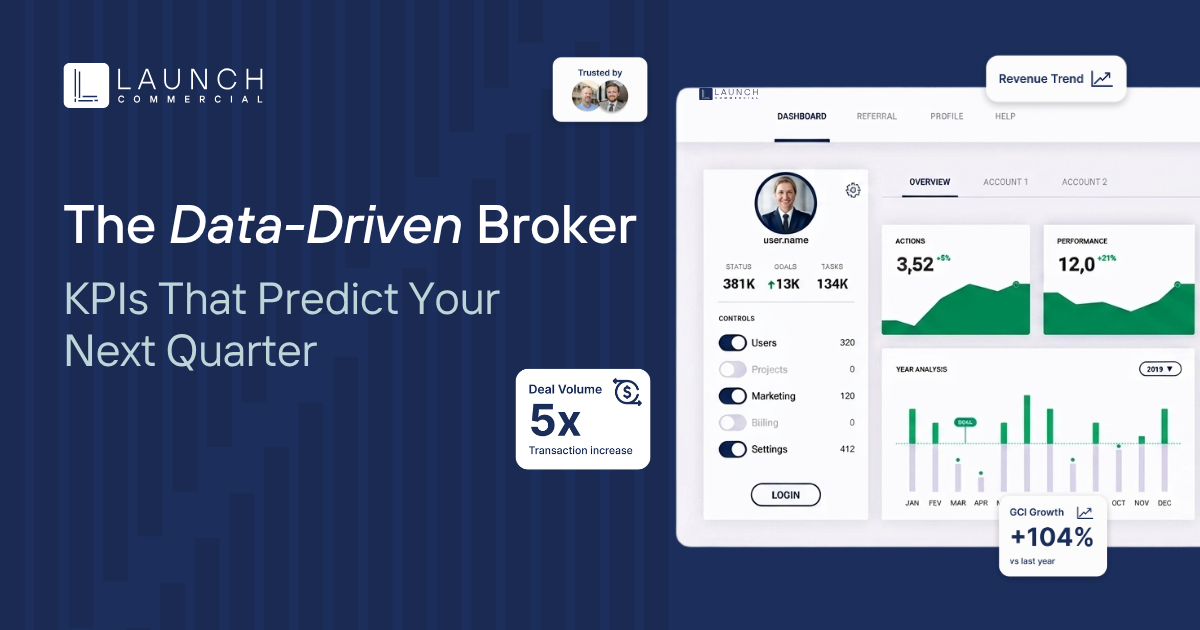
Dark blue broker marketing banner with dashboard analytics and text: “The Data-Driven Broker”
By Alicia Shepherd • March 17, 2026
The most productive CRE brokers track their numbers weekly, not quarterly. Here are the KPIs that predict revenue.
Warehouse aisle with tall orange racks stacked with boxes and cartons on both sides
March 13, 2026
The industrial real estate sector continues to evolve as tenants push for space that supports automation and modern logistics. Older warehouses are losing ground because they do not meet current tenant needs. In response, owners are investing heavily in upgrades to remain competitive and retain occupancy. This shift highlights broader trends in industrial real estate where functionality and future-readiness are becoming major value drivers. Why Upgrades Matter Now The demand for modern industrial space is rooted in how logistics and supply chain operations have changed. Tenants increasingly rely on automation and advanced material-handling systems to increase throughput and reduce costs. These technologies require taller ceilings, stronger power infrastructure, and open floor plans. Many existing buildings do not provide these features. As a result, industrial owners and developers are lifting ceilings, strengthening electrical capacity, and enhancing overall building systems to meet these expectations. Projects that increase clear height make older space more appealing to tenants who have come to view 36-to-40-foot ceiling heights as standard. Buildings constructed before 2010 mostly offered 30-to-32-foot clear heights, which now puts them at a disadvantage. This shift in demand reflects how tenant priorities have changed. Where basic warehouse space was once sufficient, tenants now select facilities based on their ability to support automation and logistics technology. Upgraded buildings must also deliver reliable power capacity to ensure uninterrupted operations. The Impact on Older Warehouses The consequences for older industrial inventory have been significant. CoStar reports that warehouses over 100,000 square feet built before 2010 have lost more than 325 million square feet of occupancy between 2023 and 2025. Of that decline, properties built in the early 2000s account for roughly 86 million square feet. This loss shows that tenants are actively moving away from older buildings in favor of newer or retrofitted facilities that better fit modern industrial needs. This trend has direct implications for asset owners. Vacancy and negative net absorption in outdated warehouses pressure owners to rethink their strategies. Instead of listing these properties at a discount, some owners are choosing to invest in upgrades to reposition their assets and attract tenants seeking modern functionality. Types of Upgrades and Costs Owners are taking different approaches when upgrading their properties. One of the most visible changes is roof-raising to increase clear height, which allows for higher racking systems and more efficient use of volume. Depending on the building size and complexity of the project, roof-raising can cost anywhere from $1.5 million to $8 million. In addition to roof-raising, owners invest in electrical capacity upgrades so that properties can support advanced material handling, robotics and heavy-duty machinery. These investments strengthen the appeal of the property to prospective tenants who view power infrastructure as a critical component of operational readiness. Other renovation work can include exterior and envelope improvements, roof replacements, site enhancements, and upgrades to fire life safety systems. These investments help reposition older buildings closer to modern Class A industrial standards. Investor and Tenant Response Renovation activity is attracting interest from different types of industrial stakeholders. Investors are recognizing that retrofitting older space can be a value-creation strategy in markets with limited new construction or where land costs are high. Upgraded buildings capture tenant interest more effectively and can also command higher rents once repositioned. Tenants are likewise adapting their real estate strategies. Many are prioritizing buildings that can accommodate their specific logistics requirements. This includes proximity to transportation infrastructure, availability of modern power capacity, and space configurations that support advanced operations. In some markets, industrial upgrades have helped older buildings maintain relevance even as new construction continues. When upgrades align with tenant needs, older properties can compete more effectively with new builds and help owners protect long-term revenue streams. Strategic Considerations for Owners For owners evaluating upgrades, several key factors are driving decision-making. Clear height and power capacity are at the top of the list because they influence tenant demand directly. Buildings that cannot meet these criteria are more likely to lose market share. Location also matters. Industrial properties with strong access to transportation networks and regional distribution hubs are better positioned to attract tenants even if they need upgrades. Owners in these locations may find it easier to justify renovation costs because tenants are already motivated by geographic advantages. Another consideration is capital allocation. Upgrades require significant investment, and owners must weigh the cost of improvements against the potential increase in occupancy and rent. In some cases, repositioning properties through upgrades can be more cost-effective than new construction, especially in markets with high development barriers. Broader Market Implications These industrial upgrades reflect a broader trend in commercial real estate where functionality and operational efficiency increasingly influence real estate decisions. Investments that align buildings with tenant needs contribute to stronger occupancy and higher long-term asset value. As industrial markets continue to evolve, owners who are proactive about modernizing assets may benefit more than those who wait for demand to shift further. Tenants are becoming more selective, and buildings that fail to meet current operational requirements risk falling behind. Looking Ahead The trend toward upgrading industrial warehouses is likely to persist as tenants continue to prioritize space that supports automation and technology-driven operations. Owners who invest strategically in their properties can enhance competitiveness and reinforce long-term market position.  In a market where tenant expectations are evolving rapidly and competition for high-quality industrial space remains strong, upgrades that improve clear height, power capacity and overall functionality are no longer optional. They are essential to meeting demand and maintaining asset performance in the modern industrial landscape.
City skyline with modern glass skyscrapers and red-brick buildings under dramatic cloudy sky
March 6, 2026
Commercial real estate investors and industry professionals saw a notable shift in market dynamics in late 2025. Instead of continuing increases, capitalization rates, or cap rates, leveled off across most property types. This plateau in cap rates accompanied higher transaction volumes and evolving investor sentiment about pricing and risk. These developments could influence how investors approach deals and portfolio strategy in 2026. Understanding what is happening with cap rates is key to interpreting broader market trends. Cap rates measure the relationship between a property’s income and its price. Investors widely use them to estimate returns and compare assets. A lower cap rate generally suggests higher price relative to income and a perception of lower risk or stronger future growth. A higher cap rate might indicate higher risk or weaker income prospects. Cap Rates Hold Ground After Rising Throughout 2024 and much of 2025, cap rates trended upward as investors adjusted expectations in response to higher interest rates and economic uncertainty. Higher rates made borrowing more expensive. Property values adjusted downward to reflect this new cost of capital. By late 2025, however, cap rates stopped climbing. Multiple market reports show that yields for major property sectors generally held steady, signaling that a major phase of repricing may be complete and that the industry has reached a cyclical top in cap rates. CBRE’s H2 2025 cap rate survey, which collected input from more than 200 market professionals across over 50 cities, found that investors were split between expecting stable cap rates and anticipating gradual compression in the near future. This is a shift from earlier expectations of continued upward movement. What the Plateau Means for Deal Activity The leveling of cap rates came at the same time that transaction volume climbed. Nationwide commercial real estate transactions increased by about 19 percent in 2025 compared with the prior year. This rise suggests buyers are becoming more comfortable participating in deals again, even after a long period of caution. Lending conditions also improved. Banks and other capital providers began to offer higher loan-to-value ratios, making financing more accessible. The CBRE Lending Momentum Index moved above its five-year average, showing more capital is flowing back into the marketplace. This combination of pricing stability and clearer credit availability encouraged a return to selective risk-taking. Sector Differences and Regional Patterns Although cap rates have stabilized at a national level, not all sectors and regions look the same. Multifamily properties saw some tightening in cap rates in specific areas, particularly in coastal and some Midwest markets. These sectors benefited from persistent demand for rental housing and stronger income fundamentals. Office properties continued to show higher cap rates. While some downtown markets saw stabilization or modest tightening in upper yield ranges, suburban office still reflected wider yields. Office remains a challenging asset class due to changing work habits and leasing patterns. Industrial and retail assets were generally more stable. Industrial yields held firm, especially in major gateway markets where logistics and distribution activity remain strong. Retail neighborhood center yields showed stability or mild tightening in parts of the Midwest and Northeast. These differences reflect how investor risk preference and income expectations vary by sector. Multifamily and industrial assets with stable, predictable income tend to attract stronger pricing support. Office and some retail sectors must still contend with structural demand challenges. What Investors Are Thinking Investor expectations shifted along with cap rate behavior. According to the CBRE survey, most respondents believe cap rates will either stay level or begin to compress in 2026, instead of expanding further. This shift in sentiment represents a departure from earlier points in the cycle when many expected continued cap rate increases. The fact that more investors now foresee cap rate compression could signal growing confidence in stability and future income growth. It also indicates that pricing may have reached equilibrium. Investors are spending less time trying to predict market bottoms and peaks, and more time focusing on asset selection and risk management within their portfolios. Lending and Price Discovery Improving lending conditions played a role in stabilizing cap rates. When lenders offer better loan terms, buyers can more effectively execute deals without demanding large risk premiums. Higher loan-to-value ratios make transactions more efficient and help align buyer expectations with seller pricing. Price indices monitored by CBRE also showed an end to declines in property values. This supports the notion that markets have completed the price discovery phase where buyers and sellers adjust their expectations to align with current realities. Instead, markets may now be entering a phase where selective risk-taking is rewarded. How to Interpret These Trends The plateauing of cap rates and the rise in deal volume suggest that the commercial real estate market is shifting from a period of correction to one of cautious optimism. Investors and lenders are better aligning their risk assessments. They are also focusing on assets with clear income potential and valuation support. For investors, this means paying attention to fundamentals. Strong tenant occupancy, stable income streams and favorable financing terms are becoming increasingly important. Markets with predictable cash flows may see more compression in cap rates, leading to higher valuations. At the same time, caution remains in sectors where demand is uncertain or structural shifts are still playing out, such as large office buildings or lower-tier retail assets. These segments may continue to show wider cap rate ranges or slower price appreciation. What’s Ahead in 2026 Looking forward, cap rates could begin a slow compression phase if economic conditions remain stable and financing remains accessible. Investors who see potential for income growth or improving occupancy may be willing to accept slightly lower yields in exchange for future upside.  The overall message from recent cap rate trends is that investors are moving beyond a defensive mindset. They are returning to markets with greater clarity around value and risk. That shift is helping commercial real estate transition from a repricing cycle to one focused on selective investment opportunities.
Title slide on dark blue: “AI in Commercial Real Estate” with subtitle “5 Practical Applications for Brokers.”
By Alicia Shepherd • March 3, 2026
The conversation around AI in commercial real estate tends to split into two camps: people who think it will replace brokers and people who ignore it entirely. Both are wrong.  AI is not replacing CRE brokers. The relationship-driven, judgment-intensive, market-specific work that great brokers do is not going away. What AI is replacing is the operational inefficiency that has always surrounded that work. The manual data pulls. The repetitive follow-ups. The hours spent building reports that should take minutes.
Launch promo: “2x Pipeline in 6 Months” beside a person working at a laptop by a bright window
By Alicia Shepherd • February 17, 2026
A 5-person commercial real estate team doubled their pipeline in 6 months — not by adding headcount, but by installing the right systems.
Man seated with laptop beside title text: “Why Most CRE Marketing Fails and What Top Producers Do Differently.”
By Alicia Shepherd • February 3, 2026
Most commercial real estate marketing fails. Not because the content is bad. Not because the broker isn’t trying. It fails because there’s no system behind it. The pattern is almost always the same. A broker or team decides they need to “do more marketing.” They post on LinkedIn for a few weeks. They create an Instagram account. Maybe they send a newsletter once. Then the pipeline gets busy, or a deal heats up, and marketing falls off entirely. Three months later, they’re back to zero — wondering why their brand hasn’t grown and why inbound leads aren’t coming.  That’s not a marketing failure. That’s a system failure. And it’s solvable.