
What Q1 2026 Is Actually Telling Commercial Real Estate Brokers — And What to Do About It
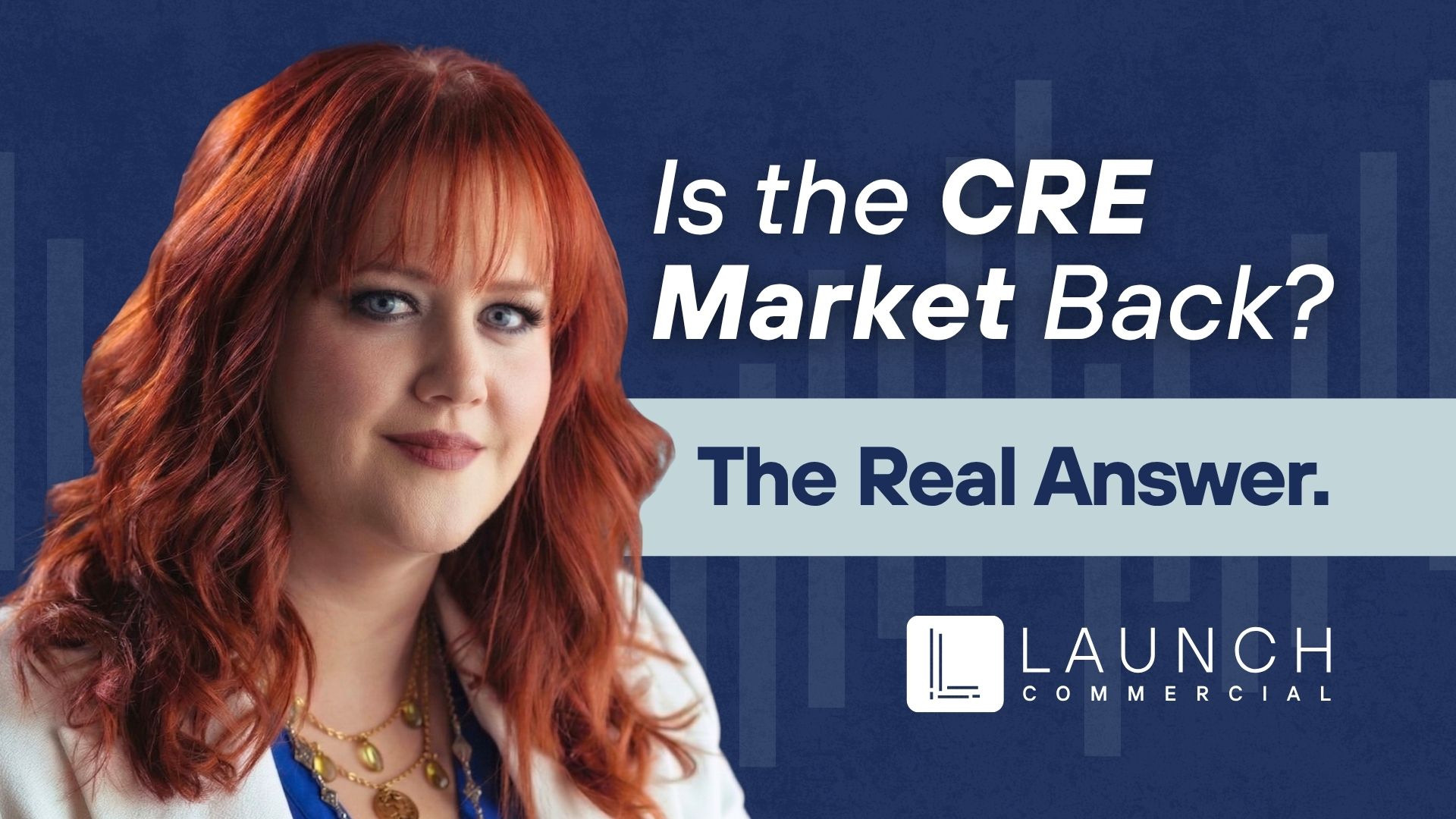
Every quarter, we step back from the day-to-day and do something most brokers don't have the bandwidth to do on their own: take a clear-eyed, data-driven look at what actually moved in commercial real estate — and what it means for the 90 days ahead.
Our Q1 2026 State of the Market Call covered the full landscape. We went sector by sector, pulled from twelve major industry reports including CBRE, Cushman & Wakefield, NAR, CoStar, and Deloitte, and brought in commercial lending specialist Chris Wezel to give us a lender's-eye view of where capital is actually flowing.
If you missed the live call, the full recording is available below. If you want the key takeaways before you hit play, keep reading.
The Big Picture: Stabilization Plus Selective
If there is one phrase that captures the 2026 commercial real estate market, it is this: stabilization plus selective.
The national thesis, drawn from every major report, is not broad-based exuberance. It is a market where capital conditions are better than a year ago, but not loose. Where some property types are clearly strengthening and others are still working through structural impairment. Where quality matters more, location matters more, and the ability to structure a deal and read debt matters more than it has in years.
CBRE projects U.S. commercial real estate investment volume will rise 16% in 2026 to approximately $805.5 billion. Cushman & Wakefield describes capital as flowing more forcefully, with tone shifting from resilience to optimism. At the same time, NAR's March 2026 update notes that economic momentum softened in February, long-term yields remain above 4%, and financial conditions are still relatively tight.
What does that mean in practice? Improving motion without universal ease. That creates opportunity for the broker who is prepared and confusion for the one who is not.
GDP growth is projected between 1.5 and 2%. Interest rates are expected to stay near 4% with modest easing over time. This is not the runaway growth environment that produces easy deals. It is a market that rewards judgment.
The Lending Landscape: What Lenders Are Actually Saying Right Now
We brought in Chris Wezel, founder of a commercial loan brokerage with access to over 2,800 lenders, to give us a real-time read on what is happening in the debt markets. What he shared was one of the most practical segments of the call.
His firm saw 110% growth in loan requests over the same three-month period in the prior year — without any change in marketing or outreach. Demand for financing is accelerating.
Here is where lenders are most competitive right now:
Owner-Occupied: Lenders love it. This is the most competitive category in the market. Banks want the business relationship that comes with owner-occupied loans, and they will compete aggressively for it. If you have a business owner client looking to buy their building, the financing environment is highly favorable right now.
Medical Office and Industrial: Strong demand from lenders. These asset classes attract significant lender interest. Chris recently had lenders competing for a portfolio of surgical centers — every lender wanted the deal.
Retail and Mixed-Use: Comfortable but scrutinized. Lenders will do these deals, but they are taking a closer look.
Multifamily: Cautious. Lenders want to see strong sponsors, strong liquidity, and solid debt service coverage. Value-add multifamily without a strong sponsor is very difficult to finance right now.
Large Office: Still very cautious. The 17% national vacancy rate has lenders pulling back. Even strong assets in this category face heightened scrutiny.
On rates and terms:
- Investment properties: 6.0% – 6.75% for strong sponsors
- Owner-occupied: 5.25% – 5.99% with promotional programs available
- SBA (7a): Prime + 1.00% – 3.00% depending on risk
- Loan terms: 5, 7, or 10-year fixed, amortized over 20–25 years
- LTV: Up to 90% owner-occupied, 70–75% investment, up to 80% multifamily
- DSCR minimum: 1.20 – 1.25 (net income, not gross)
- Approvals: Chris's average closing timeline is currently 34 days on conventional deals. Score-only programs for loans under $1M are returning approvals in 24–48 hours.
One of the most important points Chris made:
shopping your commercial loan matters far more than most brokers and clients realize. On a $4.5M deal, his team saw a rate spread of 5.79% to 7.75% from different lenders — a difference of $10,000 per month in interest. Having access to hundreds of lenders is not a nice-to-have. It is the strategy.
Sector by Sector: What the Data Actually Says
Office: Bifurcated and Capital-Pressured
National office vacancy is sitting at 16–20%, a modern high. Utilization is still only 50–60% of pre-2020 levels. Negative absorption continues — more space is being returned than leased.
But the nuance matters. This is not one market. It is at least two:
- Class A and trophy assets are still leasing, still competing, and still holding rents — provided landlords maintained the quality of the space.
- Commodity B and C space is structurally impaired. Tenants are upgrading space while reducing footprint. Older buildings that didn't invest in amenitization are becoming obsolete.
The real driver of office distress is not just leasing. It is capital. A massive wave of loans from 2018–2021 are maturing now, underwritten under completely different conditions. Refinancing today often requires more equity, lower values, or lender intervention. The question in office is not will it lease — it is whether the leasing problem or the capital problem is what needs solving first.
Industrial: Normalized, Not Broken
Vacancy has moved up to 6–7%, driven by the largest delivery of industrial space in U.S. history over the last two years. Rent growth has slowed from double digits to low single digits or flat. The landlord-dominated market has shifted to a more balanced negotiating environment.
But the demand drivers haven't moved: e-commerce, reshoring, logistics, and supply chain resilience are all still intact. New construction starts are declining, which means today's supply pressure is already easing. Industrial is not broken. It is recalibrated. Strategy wins now, not momentum.
Retail: One of the Most Misunderstood Sectors in the Market
National retail vacancy is sitting near 4–5% — historic lows. Construction is at multi-decade lows. Developers largely exited the retail space after 2008 and never came back aggressively. The result is that existing, well-located centers face almost no new competition.
E-commerce did not kill retail. It forced it to evolve. Stores became fulfillment hubs. Weak concepts died. What is left is a more efficient, more durable sector with positive rent spreads and strong demand for grocery, service, and necessity-based retail. This is one of the cleanest supply-demand setups in commercial real estate right now.
Multifamily: A Cycle Peak, Not a Broken Market
Vacancy is floating between 6–7%. We have just delivered the largest wave of new units in decades, which has pushed rent growth flat and slightly negative in some markets. Concessions are rising.
But this is a timing problem, not a demand problem. Homeownership is too expensive for most households. Household formation continues. Long-term housing shortage in some markets runs as deep as 30%. New construction starts are declining because of cost and zoning constraints, which means today's oversupply becomes tomorrow's shortage. Watch for the turn.
Hospitality: An Operating Performance Narrative
RevPAR has recovered above 2019 levels. Average daily rates are driving performance. Occupancy has improved but unevenly — leisure is strong, business travel is still catching up. Labor and insurance costs are compressing margins. New supply in the pipeline is limited, which will support existing assets over time. This is a sector where the asset you choose to work with matters more than ever.
What This Market Is Actually Rewarding in 2026
After covering every sector, one theme was consistent: this market rewards informed confidence, not broad optimism.
Specifically, it is rewarding:
- Brokers who understand the difference between a headline and a real signal
- The ability to read debt and predict it — not just price based on square footage
- Landlords who are honest about asset competitiveness
- Tenants who move with clarity rather than waiting indefinitely
- Operators who behave like underwriters — disciplined, data-driven, decisive
- Relationships that create access to capital solutions when standard paths close
2026 is an investor's market. Access alone is not enough. Judgment is what gets paid.
Watch the Full Recording
This recap covers the key frameworks, but the full call goes deeper — including Chris Wezel's live Q&A on lending, a detailed breakdown of specific loan scenarios, and the complete sector-by-sector analysis with data from twelve industry sources.
📺 Watch the Q1 2026 State of the Market Recording → https://youtu.be/5rpSuULBJis
Want This Kind of Context Every Quarter — Backed by a Team That Helps You Act On It?
The State of the Market call is one part of what Launch Commercial provides to brokers who are serious about building a structured, scalable business.
Launch Commercial is a strategic growth partner for commercial real estate brokers, teams, and brokerage owners. We build the systems, marketing infrastructure, and operational support that let you focus on what you do best — winning business.
If you want to see how we work and whether we are the right fit for where you are trying to go, the next step is a 30-minute discovery call with our team.
No pressure. No pitch deck. Just a direct conversation about your business and what growth looks like on the other side of it.